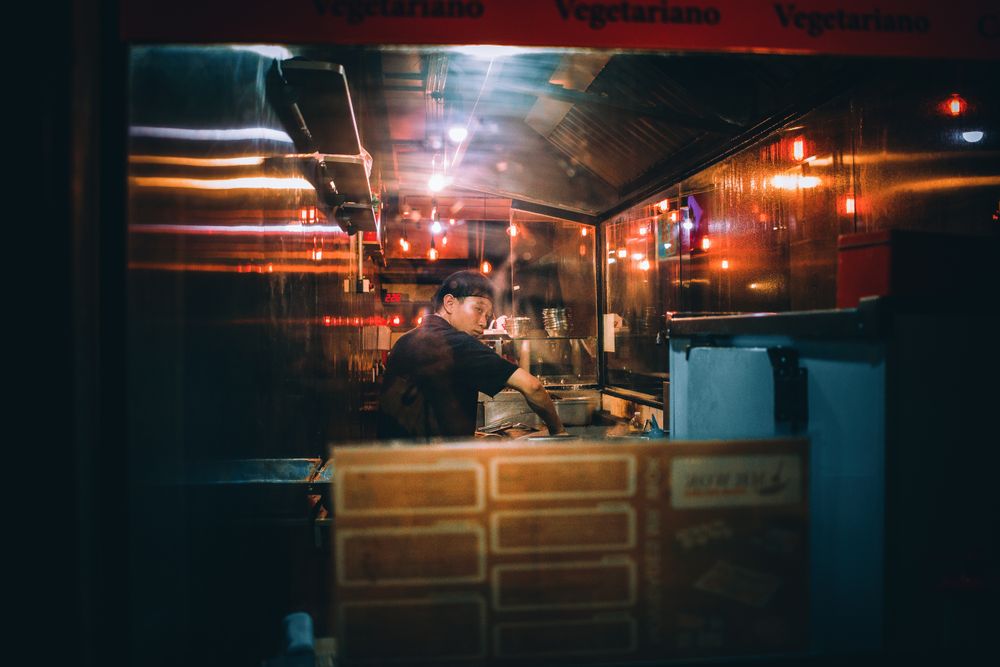
Shoot sound, steam, and hands
Appetite is triggered by motion and audio, not by a static top-down plate. The pour, the sizzle, the cheese pull, and the first cut do more than any filter.
The formats that fill tables
A café needs a small set of repeatable formats rather than daily invention.
- One dish, start to plate, in twenty seconds.
- A regular customer ordering their usual and saying why.
- The seating you want people to see: quiet corner, rooftop, group table.
- Price on screen, because the unspoken question is always what it costs.
Post when people decide where to eat
Decisions cluster before lunch and in the early evening. Publishing at those hours matters more for restaurants than for almost any other category.
Location and menu links are marketing
A viewer who wants your food and cannot find your location or your prices in five seconds becomes someone else’s customer. Keep the map pin, hours, and menu one tap from the top of your profile.
Bad line, good line.
A top-down photo of a plated dish with a filter and "Best food in town".
Twelve seconds: the ladle pouring, the steam, the first cut, real audio, no music.
"DM for price."
"Set: NPR 350. Every day till 8pm, Jhamsikhel."
Worked example: a cafe in Jhamsikhel
What a food business films
Steam, pouring, cutting, serving.
Staff, regulars, the room at full tilt.
Prices, timing, where you are.
People do not save a photo of food. They save a place they can picture themselves sitting in.
Three things you can do now.
We do this every month for clients.
Scripts, filming, editing, posting, and a simple monthly report. Our prices are on the pricing page.